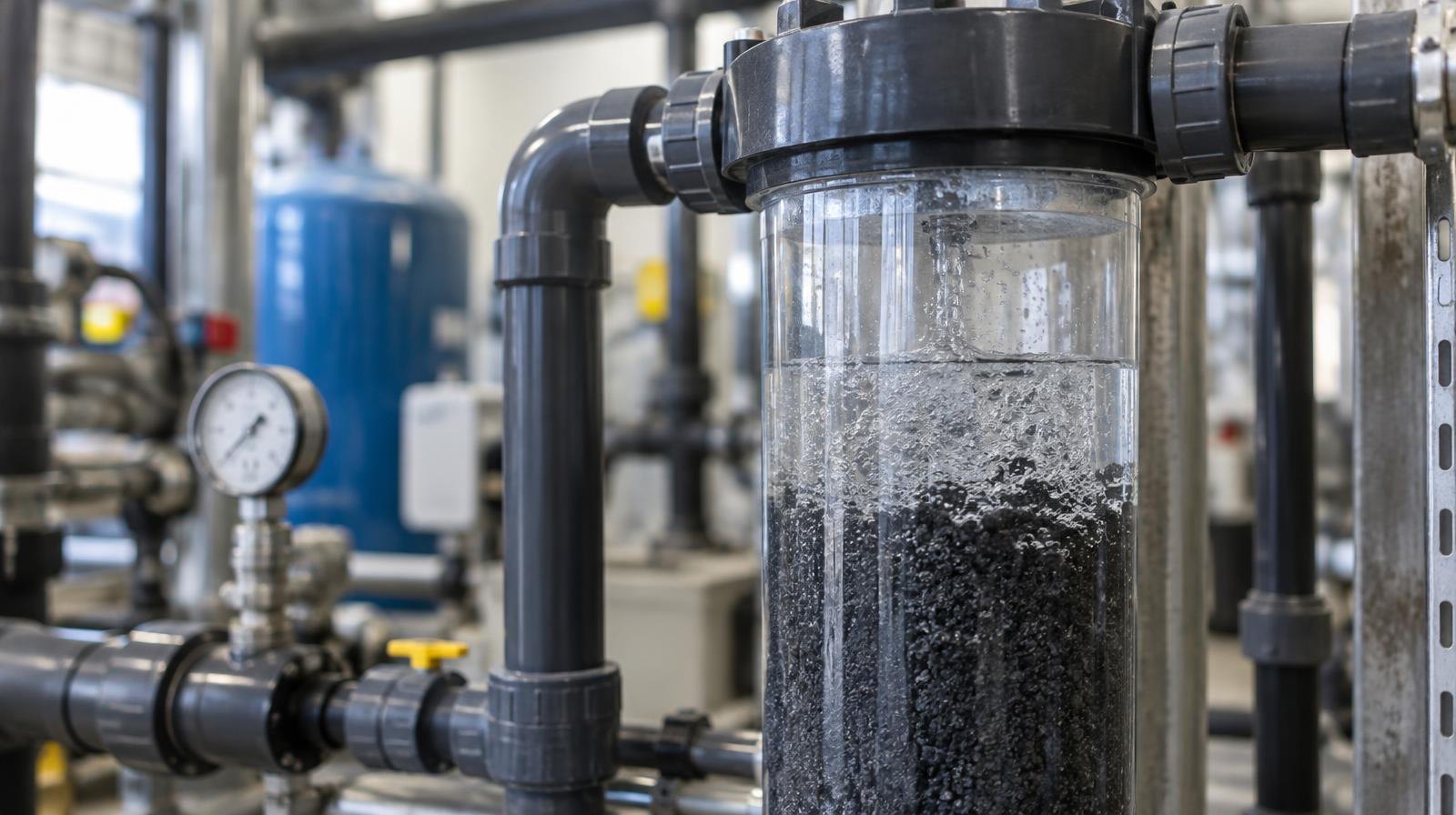
WSSC Water is searching for a contractor to build and run a pilot treatment system for PFAS at the Potomac Water Filtration Plant on River Road. The pilot is part of a nearly $298 million program to filter the long-lasting chemicals from drinking water that serves most of the utility's 1.9 million customers.
The utility reissued the solicitation Oct. 14 after canceling an earlier version posted in June. WSSC gave no explanation beyond a one-line notice citing its procurement regulations. Proposals are due Dec. 1.
The pilot targets 2 parts per trillion for PFOA and PFOS, two of the most widely regulated PFAS compounds. That is half the federal limit of 4 parts per trillion, which takes effect in April 2029.
WSSC's water currently meets the federal standard. The Potomac plant's running annual average as of August 2026 was 1.3 parts per trillion for PFOS and zero for PFOA, according to WSSC's published results. But those averages use a federal formula that counts any reading below 4.0 as zero. Actual measured levels are higher: PFOA ranged from 1.9 to 3.0 parts per trillion over the last four quarters, and PFOS averaged 2.9, as first reported by Moderately MoCo.
One sample stood out. In July 2026, treated water from the Potomac plant measured 5.1 parts per trillion of PFOS, according to WSSC's third-quarter sampling results. That was the highest PFOS reading at the plant since September 2022. It does not count as a violation because the federal limit applies to the yearly average, not individual samples.
Why spend $298 million if levels comply?
WSSC's adopted capital plan for fiscal years 2027 through 2032 budgets $297.86 million for the PFAS treatment program. The money comes from WSSC bonds repaid mainly through water and sewer charges. The project sheet, dated Oct. 1, 2025, listed the program as 0% complete with an estimated completion of June 2032.
The capital plan explains the rationale. "Future compliance is not guaranteed, due to factors such as vast numbers of potential and unknown sources of PFAS in the watershed, potential variability of PFAS levels in the source water, and the changing nature of water quality due to climate change."
Most of the spending comes late. Of the total, $257 million is scheduled for fiscal 2030 through 2032. That includes $135.8 million in fiscal 2032 alone. The estimate grew from an initial $256.5 million, though the project sheet's cost-change section reads "Not applicable."
The first phase will cover only part of the plant's capacity. The capital plan states the project "will start by sizing a PFAS treatment system for a portion of the Potomac Water Filtration Plant's capacity, with the view to scale up treatment capacity if needed."
Restarted solicitation adds scoring criteria
WSSC first sought a firm for the pilot in June. The reissued version added a new key team role: a process engineering manager whose experience designing PFAS treatment will be scored. A pre-bid meeting and site visit took place Oct. 21 at the plant, located at 12200 River Road in Potomac.
The Potomac plant is the larger of WSSC's two filtration facilities. It serves roughly 70% to 75% of the utility's customers. It is the same plant that lost power Sept. 29, prompting WSSC to ask all customers to limit water use.
Federal and state rules still shifting
The Environmental Protection Agency (EPA) has proposed giving eligible water systems two more years, until April 2031, to meet the PFOA and PFOS limits. That proposal remains pending. A federal appeals court heard arguments in September in a legal challenge to the PFAS rule.
In Maryland, the Department of the Environment (MDE) has sent the General Assembly's regulation review committee a proposal to adopt state PFAS drinking water standards identical to the federal rule, according to the committee's September summary. Adopting the state rule is a step toward Maryland taking over enforcement.
Contractors can submit proposals through WSSC's procurement portal by 2 p.m. Dec. 1.