Wootton High School students are making the case that two advisory periods a week aren't enough now that Maryland's phone ban keeps screens off during the school day.
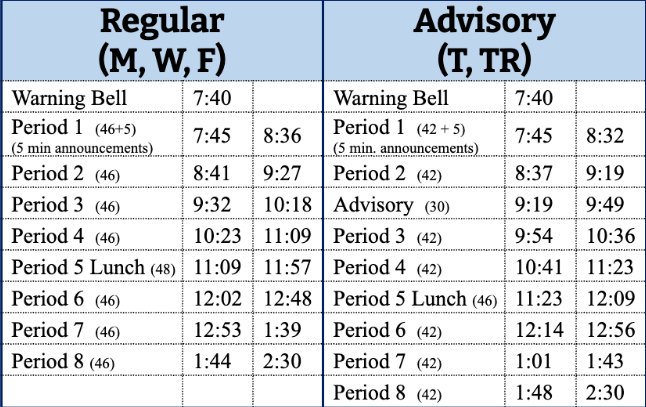
Janna Frank, a Wootton student, argued in a Saturday, Sept. 12, opinion piece in the school's newspaper, Common Sense, that the 30-minute advisory period should run daily instead of twice a week. Her reasoning: with phones off limits bell-to-bell, advisory has become the primary structured window for students to catch up on work and meet with teachers.
Frank wrote that before the ban, advisory was little more than an excuse to sit on a phone because the period lacked structure. Now students have no choice but to use the time productively.
The shift stems from Maryland's Phone Free Schools Act, which took effect July 1. The law requires every county to ban phones during the school day by the 2027-2028 school year. Montgomery County Public Schools (MCPS) moved early, implementing its all-day ban when classes began Aug. 25. The district bars students from using cell phones, MacBooks and AirPods throughout the school day.
MCPS Chief of Schools Peter Moran told the County Council's Education and Culture Committee on July 27 that the district aimed to give every student a distraction-free learning environment with consistent expectations across every school, Bethesda Magazine reported.
Frank's proposal is specific. Attach advisory to second period every day so students stay in class and can visit other teachers with a pass. She argued daily advisory would reduce homework loads by giving students consistent work time and help those juggling heavy extracurricular schedules learn time management.
Sophie Hammerman, a Wootton junior who has extended time accommodations, put the scheduling strain in personal terms in the same opinion piece. "I have extended time and trying to find time to go to my teachers to finish tests and quizzes is hard to do with a two-day advisory where they can't always see me at lunch," Hammerman said.
Frank also noted that Wootton teachers have a contracted 30-minute lunch, leaving little room for one-on-one meetings outside advisory.
Student opinion on the ban itself is split. A separate Common Sense feature published Monday, Sept. 14, found some Wootton students say the ban improves focus, while others say it limits independence and causes boredom during lunch and passing periods.
No response from Wootton administrators or MCPS on whether a schedule change is under consideration has appeared in public records. The next MCPS Board of Education business meeting is scheduled for Thursday, Sept. 24, at 4 p.m.